Invited Talks
Keynote
Programmable Biology: Generative AI for Molecular Design
Biology may be becoming programmable. Drug discovery has long meant searching what already exists. Generative AI is beginning to change that logic: designing molecules de novo, from intent rather than finding them by chance.
I will present work from Latent Labs on this transition. Latent-X1 introduced all-atom generative models for macrocyclic peptides and protein mini-binders, replacing millions of random screening attempts with tens of precision designs. Latent-X2 extended this to antibodies, producing drug-like candidates confirmed not to trigger an immune response in human blood donor assays, the first such demonstration for any AI-generated antibody. Latent-Y takes a further step towards an AI scientist for biology: an agent that puts expert-level structure-based design within reach of any researcher, executing complete campaigns from a text prompt, autonomously or as a collaborative co-pilot, at previously intractable scale.
The underlying advances in all-atom generative modelling, multi-modal conditioning, and agentic reasoning, share deep structure with problems the CVPR community knows well. This talk will explore those connections, and what it means for science when the starting point is no longer a library, but a prompt.
View full details
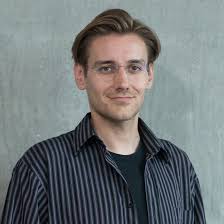
Simon Kohl
Keynote
Transforming Computing with Quantum-Centric Supercomputing
Since quantum computers were first put on the cloud 10 years ago, physicists have used them as tools to explore the rules governing the universe. But exactly when they will serve as useful tools for the broader world has been subject to debate. However, new quantum hardware, algorithms, and demonstrations from our partners have expanded the usefulness of quantum computers, which are beginning to deliver results comparable to leading classical methods—a trend accelerated by integrating quantum computing into supercomputing environments. This talk will detail how quantum-centric supercomputing is bringing together quantum, HPC, and AI to unlock a new computational frontier beyond the reach of any technology alone.
View full details
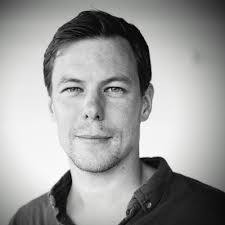
Jerry Chow
Dr. Jerry M. Chow is an IBM Fellow and Chief Technology Officer for Quantum-Centric Supercomputing at IBM. In this role, he is responsible for defining how quantum integrates as a core pillar of IBM’s hybrid compute strategy — designing a forward-looking roadmap where quantum systems operate seamlessly alongside GPUs and classical accelerators, delivering performance, reliability, and capability that the market can understand and trust. A recognized leader in the quantum computing industry, he plays a key role in sustaining IBM’s technology leadership as the field moves from scientific demonstration to commercial adoption. Trained as a physicist specializing in superconducting qubit quantum computing, Chow graduated magna cum laude with a BA in physics and MS in applied mathematics from Harvard University (2005), and earned his PhD in physics from Yale University (2010). He joined IBM as a Research Staff Member the same year. In 2016, he co-led the launch of the IBM Quantum Experience — the first cloud-accessible quantum computer — helping catalyze the worldwide quantum developer community. In 2021, he was elected Fellow of the American Physical Society (Division of Quantum Information) and received the Yale Science and Engineering Association Award for Advancement of Basic and Applied Science.
Keynote
Scaling Laws vs. Neural Laws: Toward More Natural Artificial Vision
The remarkable progress of modern computer vision has been propelled by the relentless logic of scaling laws: bigger models, more data, more compute, predictably better performance. On benchmarks like ImageNet, deep networks now match or even surpass human accuracy. Yet beneath these headline results, the alignment with human vision is fragile: on deceptively simple probes from the cognitive sciences, even the largest models drop to near-chance, and on ImageNet itself, models that reach human accuracy do so by strikingly different visual strategies — a divergence that, troublingly, widens with scale.
In this plenary, I will argue that the path to more natural artificial vision lies not in pushing scaling laws further, but in a deeper engagement with the neural laws of biological vision: developmental principles that shape how brains learn to see, and architectural constraints that impose strong inductive biases on cortical processing. I will share recent work from my lab on two such laws. On the learning side, I will present preliminary evidence that pairing the right learning objectives with naturalistic video — sequences of object transformations like those the developing brain encounters — can pull deep networks toward markedly more human-like visual strategies. On the architectural side, I will show how recent advances in state space models can scale cortical recurrent feedback into a brain-inspired alternative to transformer self-attention, one that closes the gap on cognitive probes where transformers fail, and on ImageNet traces more favorable scaling laws than transformers.
Together, these results point toward a future in which scaling laws and neural laws are in agreement rather than in tension, and in which computer vision, in dialogue with the brain sciences, helps build AI systems that are not only more capable but more aligned with the kind of intelligence we ultimately seek to understand and emulate.
View full details
Thomas Serre
Dr. Serre is a Professor of Cognitive and Psychological Sciences as well as Computer Science. He received his Ph.D. in Neuroscience from MIT in 2006 and his M.Sc. in Electrical Engineering and Computer Science from Télécom Bretagne in France in 2000. His research focuses on understanding the neural computations that support visual perception, and it has been featured in various media outlets, including the BBC, The Economist, New Scientist, Scientific American, Technology Review, and Slashdot. Dr. Serre serves as the Faculty Director of the Center for Computation and Visualization and the Associate Director of the Center for Computational Brain Science. He is also an affiliate of the Carney Institute for Brain Science and the Data Science Institute at Brown University. Additionally, he holds an International Chair in Artificial Intelligence at the Artificial and Natural Intelligence Toulouse Institute in France. He has actively participated as an area chair and senior program committee member for prestigious machine learning and computer vision conferences, such as AAAI, CVPR, ICML, ICLR, and NeurIPS. Dr. Serre is a Neuroscience section editor for the journal PLOS Computational Biology. He has received several awards, including the NSF Early Career Award, DARPA’s Young Faculty Award, and the Director's Award. Along with his team, he was awarded the 2021 PAMI Helmholtz Prize and the 2022 PAMI Mark Everingham Prize for their work on human action recognition.
No Events Found
Try adjusting your search terms
Successful Page Load